



Digital Twin Technology for Residential Development
What the data shows after 2,000 delivered projects

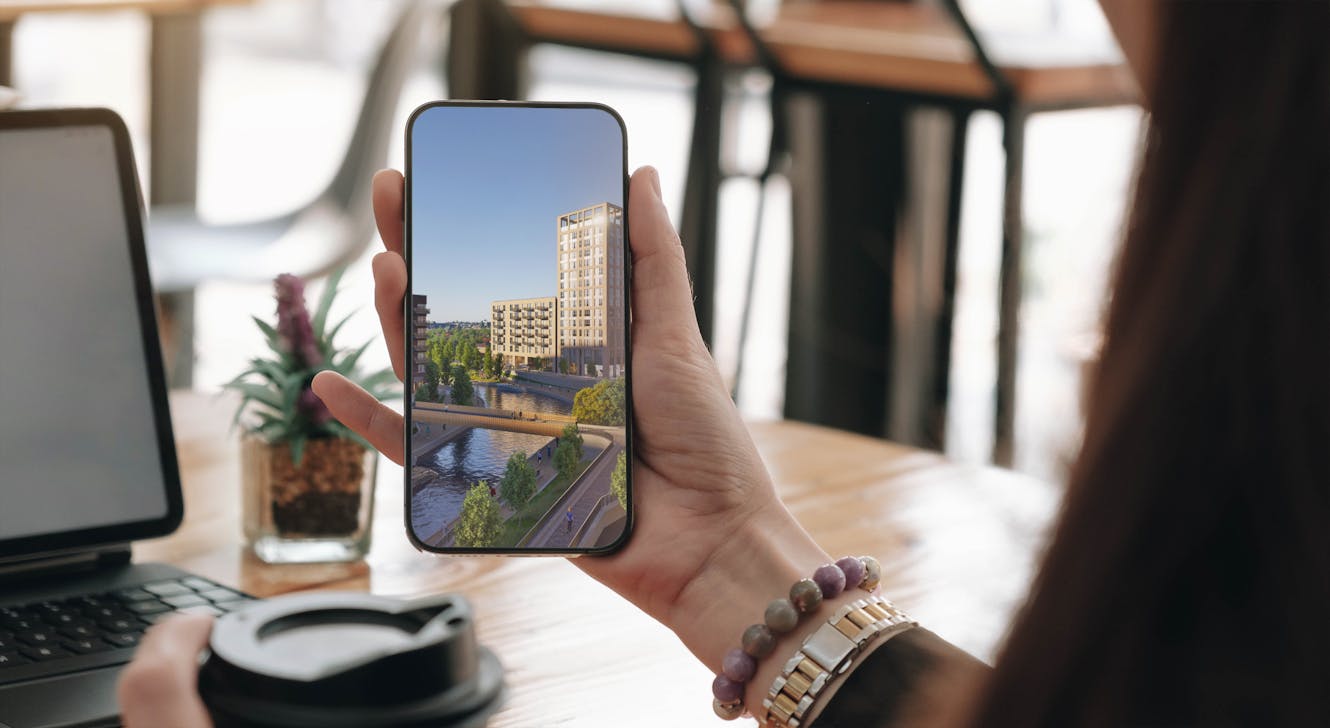
The real estate industry has entered a new era. Buyers no longer tolerate static floor plans and grainy renders as the basis for one of the most significant financial decisions of their lives. They expect to walk through a property, examine finishes, check the view from the balcony, and feel the space, all from a browser on their phone. The role of 3D virtual tours in real estate marketing has shifted from a novelty to a baseline expectation, and the data confirms what early adopters have known for years: this technology directly accelerates sales, increases prices, and eliminates inefficiencies that have plagued the industry for decades.
This article breaks down the hard numbers behind the shift, examines why off-plan property marketing demands a fundamentally different approach, and outlines what separates effective 3D real estate technology from visual gimmicks that fail to convert.
What Residential Developers Get Wrong About Digital Twin Technology
The Gap Most Developers Underestimate
Fifty-two percent of buyers find their home online first. Seventy percent use a mobile device during the property search. They arrive at a listing having already formed expectations, and what most residential developers currently publish is a photograph from a tripod, a PDF floor plan from the architect, and a price.
The gap between what buyers expect and what they find has been widening for years. It shows up in longer qualification calls, lower portal conversion rates, and sales teams spending time answering questions that a better online experience would have already resolved.
This is not a marketing problem. It is an operational one. And the developers who are closing it fastest are not doing it with better photography.
Digital twin technology for residential development is a structural response to a structural problem. Understanding what it actually is, technically and commercially, matters before any developer spends a euro on it.
What a Digital Twin Actually Is (And What It Is Not)
The term “digital twin” has been stretched across enough vendor decks to lose meaning. Here is the actual definition.
A digital twin for a residential apartment is not a render. It is not a 360-degree photograph. It is not a video flythrough. Those are static outputs. A render shows you one moment in one light condition with one furniture choice. Once produced, it cannot change without being reproduced.
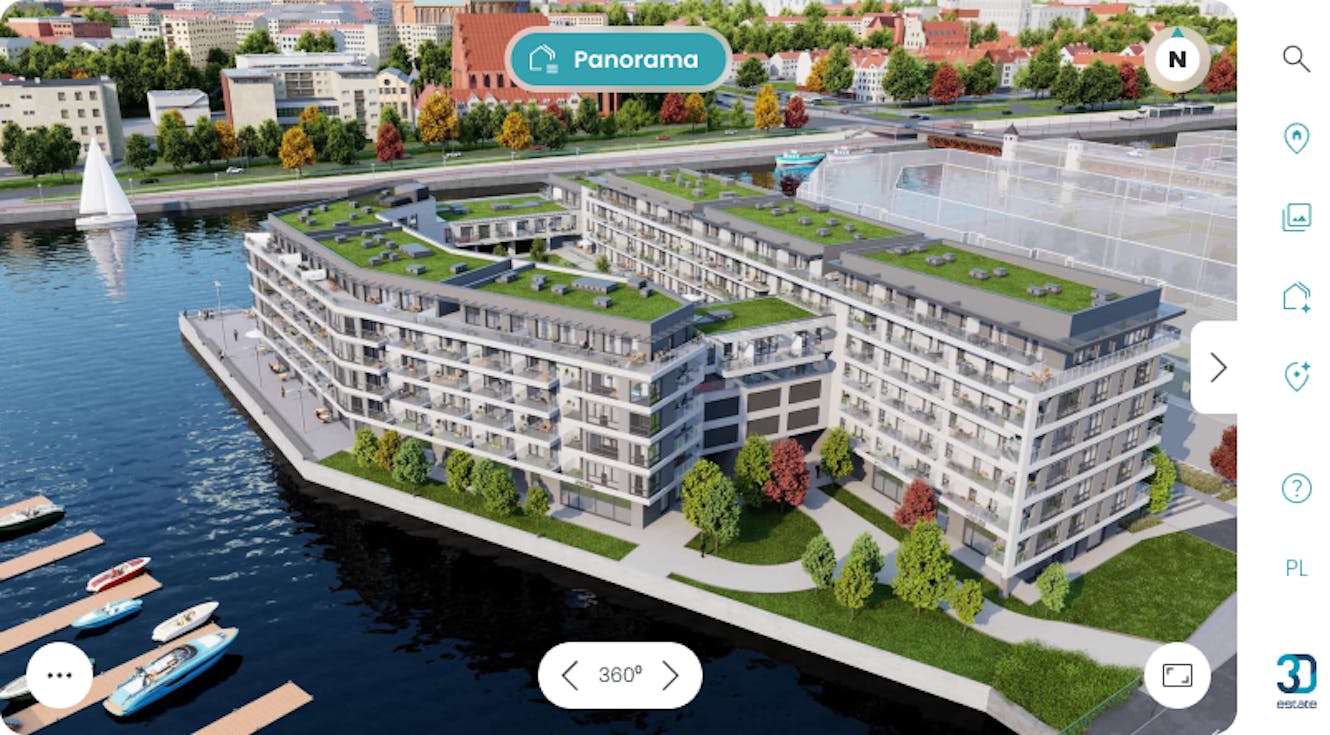
A digital twin is an interactive application built from the architectural data of a real property. The buyer moves through the space. They change the interior finish. They look out from the balcony at the actual view from that floor and orientation. They switch between day and night lighting. They compare two apartments side by side. The application responds in real time because it is running on a real-time rendering engine.
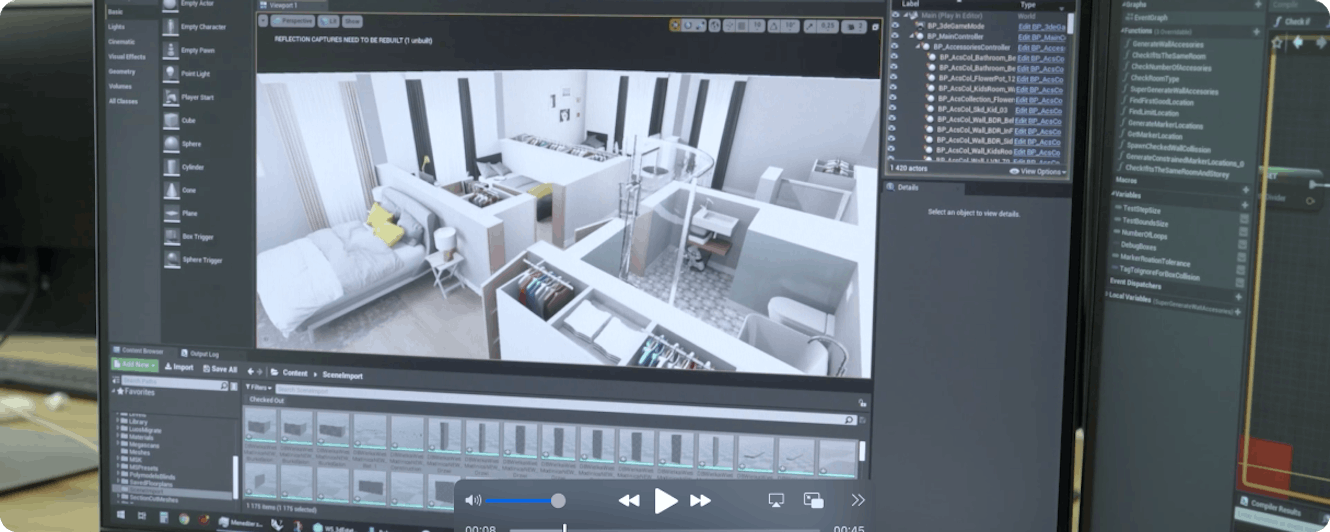
At 3D Estate, we build these applications on Unreal Engine 5, the same technology stack used in major film productions and the most demanding interactive entertainment on the market. The processing runs on Azure Cloud. The result is that a developer uploads a 2D floor plan and receives a fully interactive 3D application in approximately fifteen minutes. Not three weeks of render farm time. Fifteen minutes.
That speed is not a sales point. It is a technical consequence of building a proprietary automated pipeline over eight years and 2,000 delivered projects. The time to market for a new launch phase drops significantly. That has real commercial implications for phased developments where sales need to start before construction reaches the upper floors.
The distinction between “visualization” and “digital twin” is not semantic. One is content. The other is a sales tool.
Where Most Developers Are Today, and What It Costs Them
Most residential developers in Western Europe currently operate with a mix of high-quality renders, a portal listing with photographs, and a sales office with physical scale models or printed materials. For volume developers with strong brand recognition in their market, this approach still closes sales. That is worth acknowledging honestly.
But it closes sales more slowly, and it filters out a growing share of buyers who will not commit without interactive digital access to the property.
A buyer who has spent twenty minutes inside a 3D application for an apartment has already made a significant cognitive investment. They arrive at the sales office having already pictured their life in the space. The qualification process is shorter. The objections are fewer. The conversation starts further along.
What this costs developers who do not offer it shows up in two places. The first is direct: longer inventory holding times, more sales team hours spent on qualification calls that could have been answered digitally, and lower conversion from portal traffic to booked appointments. The second is indirect: in markets where a competitor offers a fully interactive experience and you offer renders, the comparison is made at the listing stage before your sales team enters the conversation.
Our own survey data from September 2024, covering 47 respondents across 35 companies, found that 83% of active 3D Twin users report a clear increase in marketing and sales efficiency. Fifty-nine percent report that efficiency improvement exceeds 50%. That is not a marginal gain.
How It Changes the Sales Process, Specifically
The operational impact of a working digital twin application runs deeper than “better buyer experience.” The mechanics change at several points in the funnel.
Consider a phased residential development launching its second block while the first is still under construction. Traditionally, sales for the new phase depend on updated renders, resized floor plans, and a fresh round of portal listings. Each of those takes time and budget. With a digital twin pipeline where the base architecture is already automated, the second block deploys into the existing application as a new phase addition. The sales team begins using it the day the floor plan is finalized.
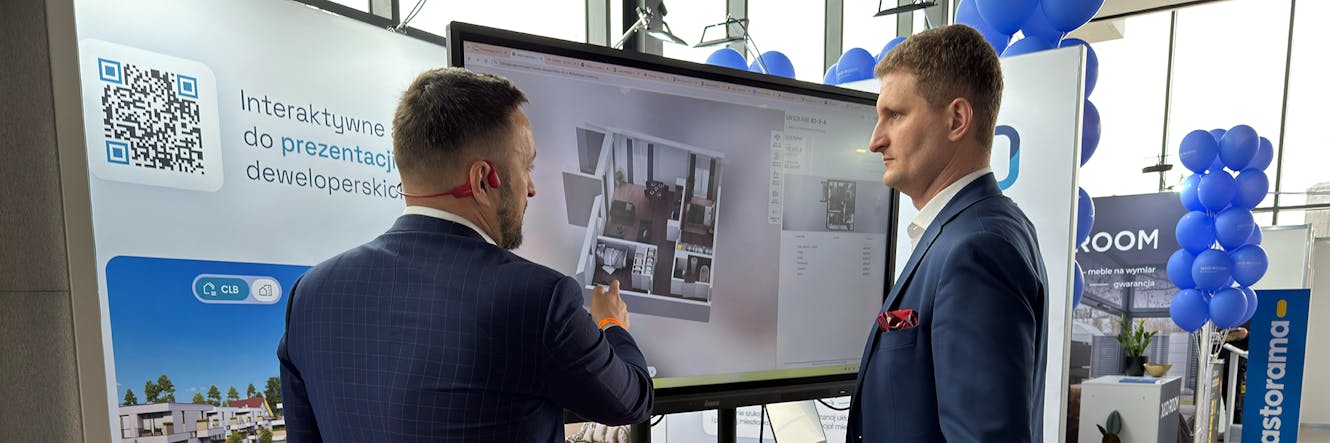
Inside the sales office, the shift is equally concrete. Sales consultants using 3D Twin’s Free Presenter mode work offline, without internet dependency, on a kiosk or tablet. The buyer sits next to the consultant and navigates the apartment together with them. The consultant sends a follow-up link for that specific apartment directly from the application. The buyer’s partner, who was not at the meeting, can explore the same apartment on their phone that evening. That follow-up link is tracked. The developer knows whether the apartment was viewed again, for how long, and on what device.
That is not intuition. It is pipeline data.
Our survey respondents reported up to a 6x improvement in conversion rates compared to standard apartment portal performance. Ninety-three-point-six percent use the application in their daily sales process. Sixty-eight-point-two percent gave an NPS score of 9 or 10 out of 10. Developers like Greystar, Acciona, Vinci Immobilier, and Eiffage are not using 3D Twin because of what it looks like. They are using it because of what it does to their sales numbers.
What Actually Makes Implementation Work (Or Fail)
Digital twin implementations fail or underperform for a small number of consistent reasons. None of them are technical.
The first failure mode is treating the application as a marketing asset rather than a sales tool. When the interactive 3D application lives only on the marketing website and is not integrated into the sales office workflow, its impact is a fraction of what it could be. Buyers engage with it online. But the moment of conversion happens in the sales office, where the consultant is still working from printed floor plans and a PDF price list. The continuity breaks.
The second failure mode is incomplete coverage. When only selected units are modeled in 3D because the developer wanted to reduce scope or cost, buyers notice the gap immediately. They want to see the apartment they are actually considering, not the showcase unit. Partial coverage actively damages trust.
The third failure mode is data integration that does not happen. A 3D application showing an apartment price that has been updated in the CRM but not reflected in the interactive experience creates exactly the legal and reputational exposure that developers work hard to avoid. Real-time CRM synchronization is not a premium feature. It is a requirement for the system to function safely in a live sales environment.
What makes implementation work is treating the digital twin as operational infrastructure from the start, not as a design layer applied after the sales process is already built. The developers who get the most out of this technology are the ones who hand it to the sales team on day one and ask them to break it.
The Next Five Years in Residential Sales
The expectation of interactive, mobile-first access to property information is now set by industries with far larger development budgets than real estate. Buyers who configure cars, furniture, and consumer electronics in full 3D before purchasing will not find a static floor plan PDF to be a satisfying substitute for a residential purchase an order of magnitude larger.
Developers who build digital twin capability into their standard launch process now are building institutional knowledge, not just deploying a tool. The teams who have used this in two, five, ten launches understand how to deploy it faster, position it in buyer conversations, and read the analytics it generates. That institutional knowledge compounds.
The technology itself will continue to evolve. The question for a developer is not whether this becomes standard practice. The question is whether they are building that capability now or paying to catch up later.
If you want to see exactly what this looks like for a residential project at your scale, we are available for a direct walkthrough of the platform. No presentation deck. The application itself, on a live project.
Request a demo at 3destate.com.
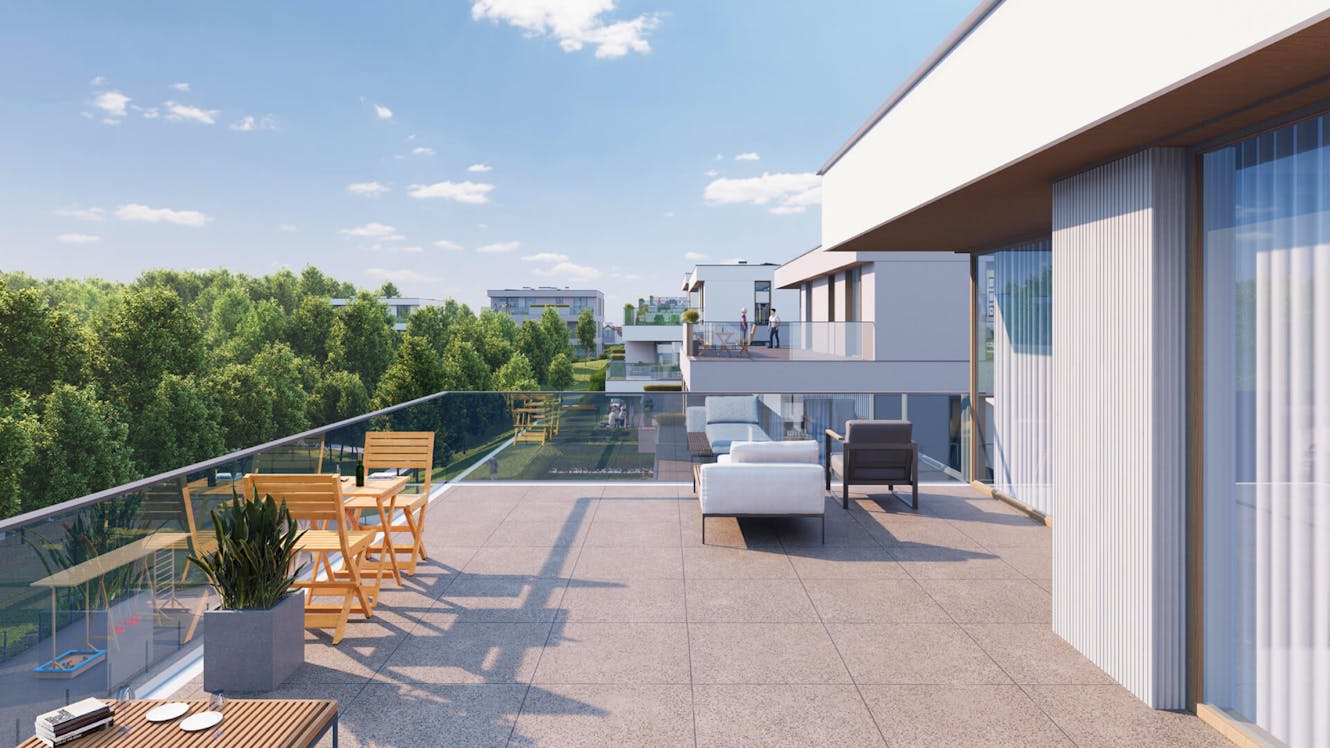
3D Twin — investment BPI Real Estate - Bernardovo